Design Thinking · SAP Fiori · Agentic AI on SAP BTP
Healthcare and Life Sciences SAP Cloud Platform SAP CS (Customer Service) SAP Fiori Featured
How a global medical device maker transformed service-order processing with SAP Fiori and Design Thinking
Global Medical Device Manufacturer Delivered 2025
Mindset ran a Design Thinking engagement with the device maker's service and call-center teams, rebuilt service order processing on SAP Fiori, and cut a multi-screen maze down to a single screen. Adoption climbed sharply across the field service team, then in 2025 the work evolved again with a joint SAP x Mindset Agentic AI Design Workshop.

By the numbers
-
Strong
Voluntary adoption across the field service team
-
1 screen
All service order info, down from many screens
-
Online + offline
Multi-device field and call-center coverage
-
2017–2025
Multi-year SAP partnership across UX, mobility, and AI
Why this matters
A real Design Thinking engagement that went the distance: user research with field technicians, a Personas-vs-Fiori decision the team could defend, and a Fiori app that earned strong voluntary adoption. Then, eight years later, the same client came back to explore agentic AI.
Before
A multi-screen service order process
- Service technicians clicked through many screens and toggled between SVN and Service Orders for every call.
- No mobile or offline option, limiting field technicians to connected desktop workflows.
- Adoption around 20%, most people found workarounds rather than using the SAP system.
After
Single-screen Fiori app with near-universal adoption
- All service order information on one screen, with far fewer clicks and no tool-switching.
- Multi-device, multi-platform, online and offline via SAP Cloud Platform and Kapsel.
- Strong voluntary adoption, and a 2025 Agentic AI workshop to take the next step.
“WOW! Friday was awesome using Fiori. I was able to do my service orders in record time.”
The challenge
The device maker's SAP system for service order processing had accumulated years of repetitive, redundant steps. Service technicians had to click through many screens to find what they needed and constantly toggle between SVN and Service Orders, an inefficient loop that added seconds to every call in a high-volume call center.
The business wanted to shave real time off search and processing per call, without cutting corners on the underlying process. That meant the solution had to be intuitive for experienced technicians (average tenure: 9.4 years, average age: 46), work on multiple devices including offline, and handle cross-system data without pulling users into multiple tools.
Before committing to a path, the team needed to evaluate whether SAP Screen Personas or SAP Fiori was the right approach. The answer wasn't obvious, and getting it wrong would mean rebuilding again later.
What we did
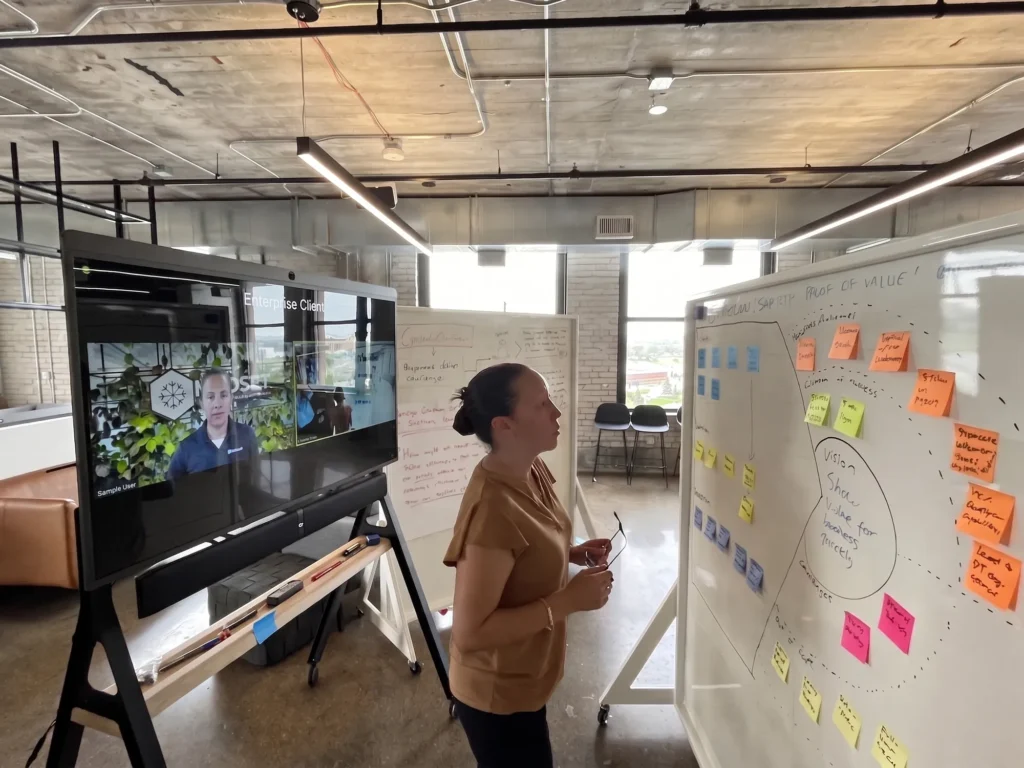
Mindset ran a Design Thinking engagement grounded in the actual people who would use the app. The team built personas for service technicians, went directly to them to surface specific pain points, and ran a structured Personas-vs-Fiori evaluation. Fiori won on more than looks. It could support cross-system process redesign in ABAP and JavaScript in a way Screen Personas could not.
From there, the team used rapid prototyping with continuous user feedback to design and build service order apps with far fewer clicks. All relevant information appeared on a single screen. The apps worked across multiple devices and platforms, both online and offline, via SAP Cloud Platform and Kapsel.
The engagement ran in phases: a Service and Repair proof of concept and checklist advisory in 2017, the full Customer Service app build through 2019 and 2020 with change orders and extensions, and a Fiori App Analyzer install in 2021. In 2025, Mindset returned alongside SAP for a joint Agentic AI Design Workshop, the next stage in the device maker's SAP AI journey.
The outcomes
Adoption tells the story most clearly. The new Fiori service order apps earned strong voluntary adoption across the field service and call-center teams. That kind of voluntary uptake in a field-service context is unusual, and the technicians said so themselves.
Service order management was completed in a fraction of the time it previously took. All relevant information appeared on a single screen, without overwhelming users. The solution ran across multiple devices and platforms, online and offline, so technicians in the field and agents in the call center worked the same way.
The 2025 Agentic AI Design Workshop marked a new chapter. The device maker participated in the joint SAP x Mindset workshop to explore agentic AI patterns against their SAP landscape, putting them among the first large enterprises in the SAP ecosystem to work through AI design at this level.
If we built this today
Concept · not delivered scopeOne screen, every service order in context.
This is a forward-looking concept, not the scope we delivered on this engagement. It is the build we would reach for now, grounded in SAP that ships today.
The original engagement killed the screen-to-screen maze in service order processing for a high-volume call center, and today that same single-screen idea is what a Joule agent would assemble on its own before the call even connects.
The data product
Customer Intelligence
Grounds the agent in service history, install base, and case patterns drawn across the order data, so the next-best-action it proposes reflects what actually happens on these calls rather than a single record. It gives the co-pilot the same end-user grounding the personas gave the original design.
Intelligent Application on SAP Business Data Cloud
The Joule agent
Service Order Co-pilot
Reads the open service order, equipment history, warranty, and parts availability from SAP CS, then proposes the next action and pre-fills the order so the call-center agent confirms instead of hunting across screens. It pulls the service context and the order context into one view, which is the toggle the team designed out by hand.
SAP S/4HANA Service, SAP CS (Customer Service) · PROPOSE · Service order handling time per call
The Fiori app
The S/4HANA service order app with embedded Joule
The OOTB S/4HANA service order app with Joule sitting in the launchpad, so the agent asks for the right order, customer, and equipment in plain language and gets it surfaced in context. It is the productized version of the single-screen, low-click app the team built by hand.
Embedded in the Fiori launchpad
We would still mine the real click paths in SAP Signavio first, map the CS landscape in SAP LeanIX, and let our MIND accelerators carry the old service order flows into the new one so nothing about how techs actually work gets lost.
What we built
-
Chose Fiori for cross-system process redesign capability in ABAP and JavaScript
Personas-vs-Fiori evaluation
Structured comparison of SAP Screen Personas and SAP Fiori as the redesign path, grounded in technician personas and user research, before committing to build.
-
Field technicians and coordinators involved in feedback and rollout
Design Thinking engagement
Built service technician personas through direct user collaboration, surfaced specific pain points, and ran rapid prototyping cycles with continuous field feedback.
-
Strong voluntary adoption across the field service team
Service Order Fiori app
A single-screen service order processing app with far fewer clicks than the legacy flow, handling the full SVN and Service Order process in one place.
-
Works on all devices, online and offline
Multi-device, offline-capable deployment
The apps deployed on SAP Cloud Platform using Kapsel, running on multiple devices and platforms with full online and offline support for field technicians.
-
Eliminated the SVN-to-Service-Order toggle
Cross-system ABAP and JavaScript redesign
Backend process redesign connecting SVN and Service Orders in a single view, enabling the single-screen experience the business needed.
-
Delivered in 2021 as part of the multi-year engagement
Fiori App Analyzer install
Installed and configured the SAP Fiori App Analyzer tool for the device maker in 2021, giving the team ongoing visibility into their Fiori landscape.
-
One of the first large-enterprise SAP agentic AI design engagements in 2025
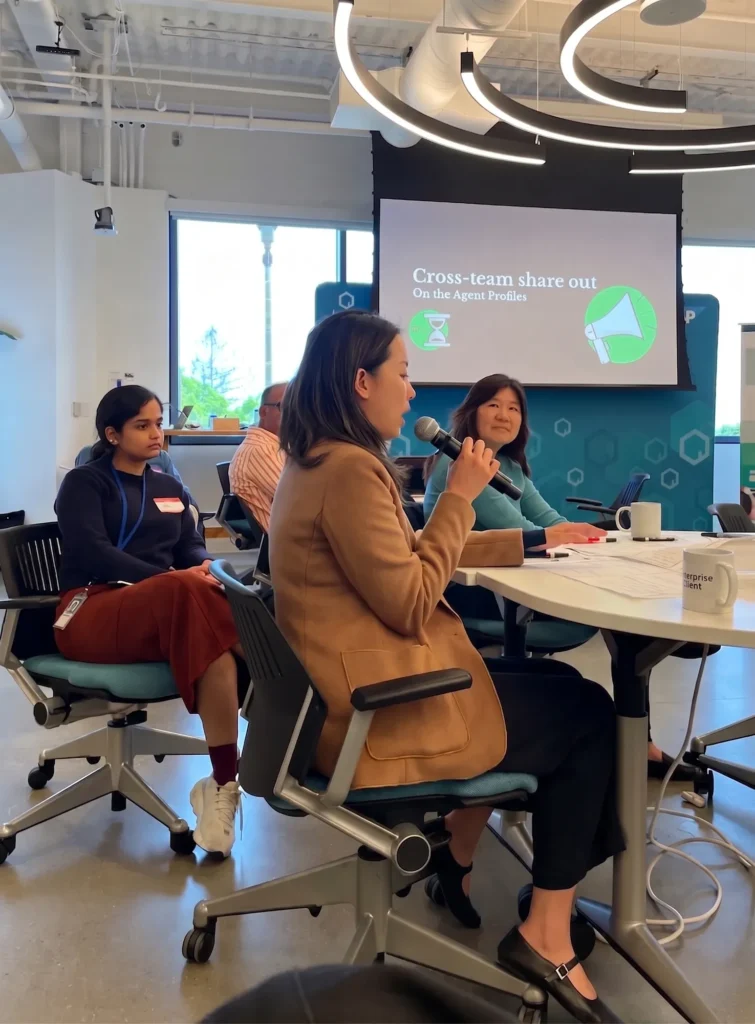
SAP x Mindset Agentic AI Design Workshop
A joint facilitated workshop in Palo Alto in 2025, co-run by SAP and Mindset, helping the device maker's teams explore and design agentic AI patterns for their SAP landscape.
A look at the work