SAP Connect Days for AI + Data Leaders · Houston · September 2026
Healthcare and Life Sciences SAP BTP SAP Build SAP Build Work Zone Featured

How Solventum went from Signavio process mining to Joule agents in order-to-cash
Delivered 2026
Signavio showed a block adds about 23 hours to an order. Solventum designed the fix with its CSRs, and Mindset built a blocked-orders dashboard and two Joule agents to close the gap.
By the numbers
-
+23 hours
Added to an order's path from entry to marked-for-delivery when it hits a block. About 50 percent longer. Measured in SAP Signavio.
-
18 percent
Of orders hit a block, against a Signavio benchmark median of 1 percent
-
4 weeks
Design sessions with the CSRs who work the orders
-
2 Joule agents
Fulfillment Status and Customer Material Info Record built. Phase In / Phase Out next on the roadmap.
Why this matters
This is the pattern we think most SAP shops should copy. Mine the process in Signavio, pick the use case from the data, design with the people who do the work, then build the agent on BTP. Solventum is doing it in order-to-cash and took the story to the SAP stage with us.
Before
Swivel-chair triage across three systems
- One of roughly 200 customer service reps started every day re-checking the same blocked orders by hand.
- Credit and pricing blocks landed in an analyst queue that only grew. Every pricing change meant another manual touch.
- An order leader could not answer where an order was, or why, without three systems and a phone call.
- An order that hit a block took about 69 hours to reach marked-for-delivery, against 46 for one that did not. Roughly 23 hours lost to the block.
After
What changes when it goes live
- CSRs will work one prioritized dashboard of the orders that need a human, instead of a morning sweep across screens.
- One SAP Build app on BTP replaces the swivel chair, reached from a tile in SAP Build Work Zone.
- Order leaders will ask Joule where an order is and why, and get an answer with the source cited.
- On the roadmap: a triaged block queue for the analysts, and the Phase In / Phase Out agent.
“Most enterprises pick AI use cases by intuition. Solventum measured first.”
The challenge
Solventum is the health care business 3M spun out in April 2024. It trades on the NYSE as SOLV, is headquartered in St. Paul, Minnesota, and stood up its own SAP S/4HANA landscape as part of the separation. That gave the ERP and Apps Transformation Office a rare clean slate, and a question most enterprises answer by gut: where should AI go first?
Order-to-cash was the obvious candidate, but obvious is not evidence. Roughly 200 customer service reps started every day re-checking the same blocked orders by hand. Credit and pricing blocks piled into an analyst queue that only grew. An order leader could not say where an order was, or why, without three systems and a phone call. Nobody had a number for what that cost.
What we did
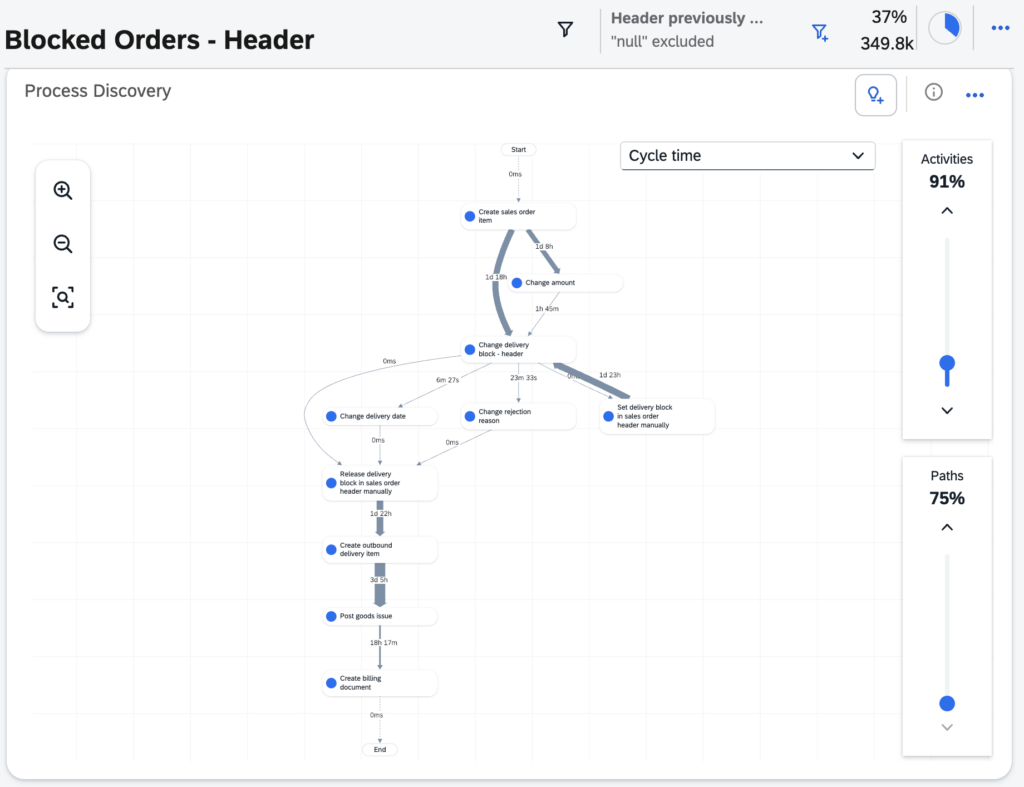
Phase 1 was SAP Signavio Process Intelligence, not a workshop vote. Mindset mined Solventum's order-to-cash flow out of S/4HANA and benchmarked it. The data pointed at blocked orders. An order with no block moved from entry to marked-for-delivery in about 46 hours. An order that hit a block took about 69 hours, an extra 23 hours, or roughly 50 percent. And 18 percent of Solventum's orders hit a block, against a benchmark median of 1 percent. Those are the numbers the rest of the program was aimed at.
Next came four weeks of design sessions with the CSRs themselves. The people who would live with the result helped shape it, which is where adoption starts.
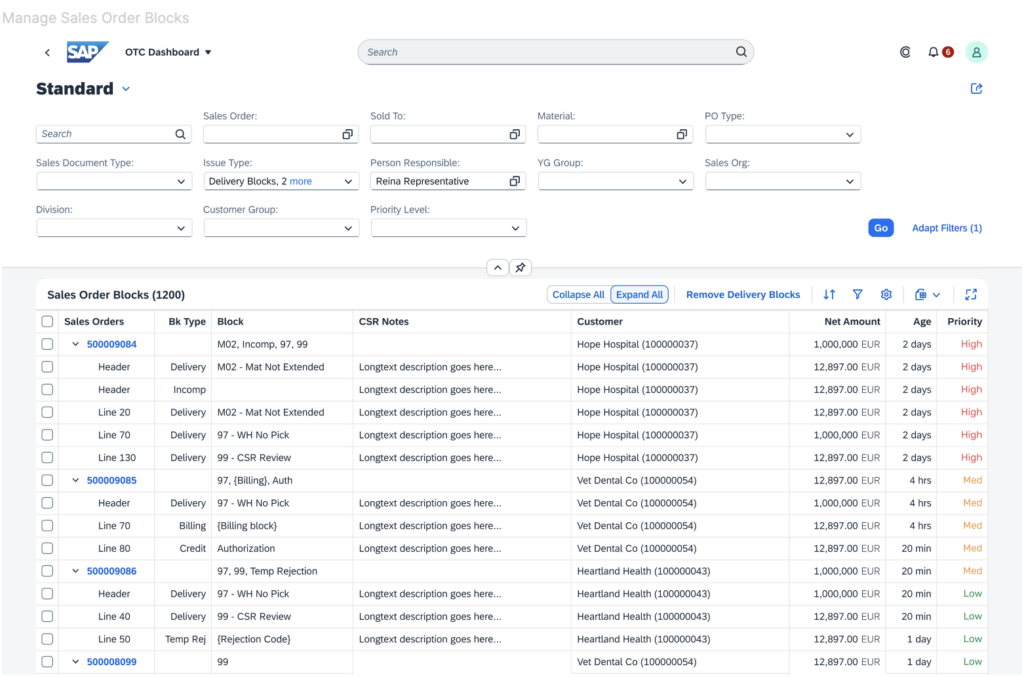
Then two builds on SAP BTP, kept deliberately outside the system that takes the order so they could be built and tested without touching it. The first is a blocked-orders dashboard, one SAP Build app (CAP and Fiori) reached from a tile in SAP Build Work Zone, that pulls every block type into a single prioritized view instead of a swivel chair across screens. The second is two Joule agents built in Joule Studio. Fulfillment Status is an orchestration agent that calls a sales-order-details agent and a delivery-details agent to answer where an order stands. Customer Material Info Record reads and writes CMIR records. A third agent, Phase In / Phase Out, is designed and next on the roadmap. The agents reach live S/4HANA data through a governed gateway in Solventum's own BTP tenant rather than through copies of it.
The outcomes
The order-to-cash gap is now a measured, benchmarked number instead of a feeling, and the fix is built to that number. The dashboard and the two agents are built and being readied for Solventum's production BTP. None of it is in front of users yet, so the outcomes below are what the build is designed to do, not results we are claiming.
Once live, CSRs get one prioritized view of the orders that need a human instead of a morning sweep across screens. Order leaders can ask Joule where an order is and why, and get an answer with the source cited. A triaged block queue for the pricing and credit analysts, and the Phase In / Phase Out agent, are the next items on the roadmap.
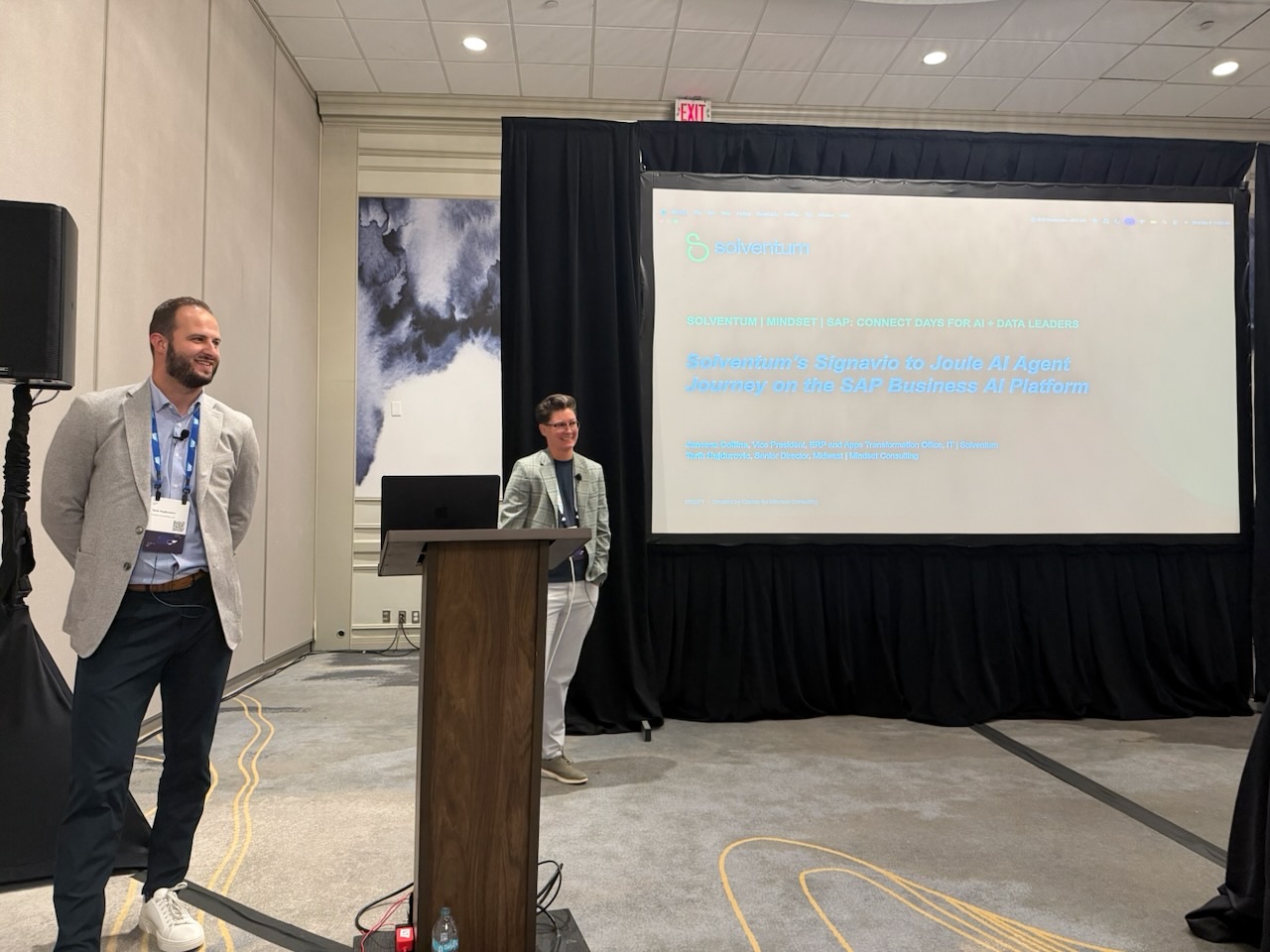
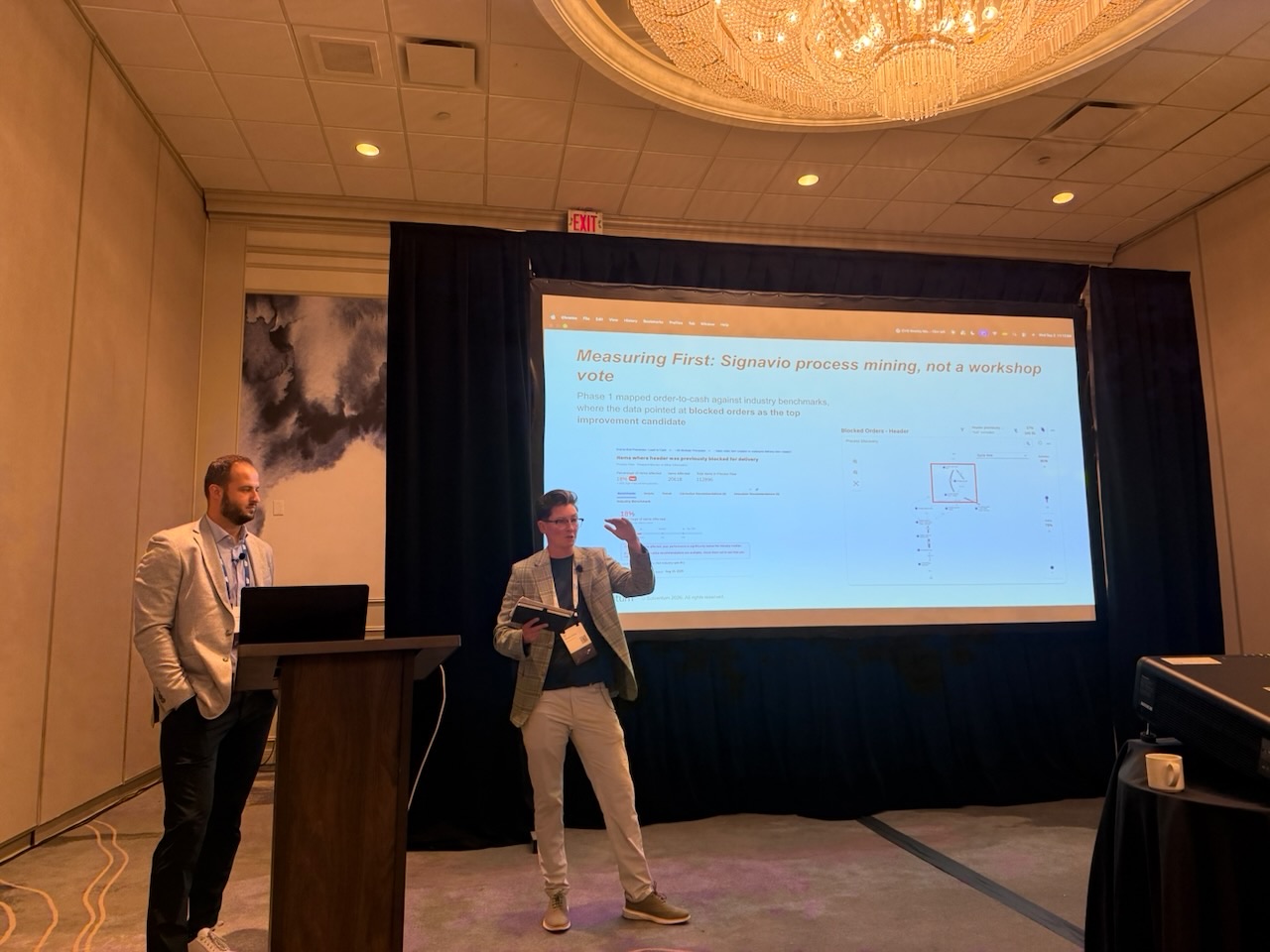
Janessa Collins, Solventum's Vice President of the ERP and Apps Transformation Office, and Tarik Hujdurovic of Mindset presented the journey together at SAP Connect Days for AI + Data Leaders in Houston on September 2, 2026. The deck is below, as presented. A few of its slides round the numbers differently and list Phase In / Phase Out with the built agents. The figures on this page are the ones the delivery team stands behind.
How it fits together
Measure first. Design with the people who do the work. Then build the agent.
The order matters. Every later step at Solventum points back to a number the mining produced.
Context
SAP Signavio process mining
Order-to-cash mined out of S/4HANA and benchmarked. A block added about 23 hours to an order, and far more orders hit one than the benchmark.
69 h vs 46 h · 18% blocked vs 1% median
Design
Four weeks with the CSRs
The reps who work the orders shaped the dashboard and the agents. Adoption starts here, not at go-live.
~200 CSRs · Design Thinking
Build
A dashboard and two Joule agents
One SAP Build app on BTP, plus the Fulfillment Status and Customer Material Info Record agents from Joule Studio. Phase In / Phase Out is next.
SAP Build · Joule Studio · SAP BTP
Govern
A governed gateway
The agents reach live S/4HANA data through a governed gateway in Solventum's own BTP tenant, not through copies of it.
Live S/4HANA data · Solventum's BTP
The questions Solventum put on stage for what comes next, still being worked through: when to bring security and identity in, how intake and prioritization work, who owns each agent from idea through support, and how value gets measured.
What we built
-
69 h with a block vs 46 h without
Order-to-cash process mining in SAP Signavio
Phase 1 mapped the flow out of S/4HANA and benchmarked it. A block added about 23 hours to an order, and 18 percent of orders hit one against a 1 percent benchmark median. Blocked orders came out as the top improvement candidate.
-
Replaces swivel-chair triage
Blocked-orders dashboard
One SAP Build app (CAP and Fiori on BTP) that pulls delivery, credit, billing and rejection blocks into a single prioritized view, reached from a Build Work Zone tile.
-
Joule agent, built
Fulfillment Status agent
An orchestration agent that calls a sales-order-details agent and a delivery-details agent, then answers where a sales order stands.
-
Joule agent, built
Customer Material Info Record agent
Reads customer material info records and can create and maintain them.
-
Roadmap
Phase In / Phase Out agent
Designed to confirm a replacement material is active and sellable, find the sales orders and CMIR records that need updating, make the update, and hold anything incomplete or mispriced. Next on the roadmap.
-
Govern
Governed agent gateway
The agents reach live S/4HANA data through a governed gateway in Solventum's own BTP tenant rather than through copies of it.
A look at the work

Presented publicly
We took this work to the SAP stage.
Solventum picked its first AI use case from the data, not a workshop vote. SAP Signavio mining of order-to-cash showed an order that hit a block took about 69 hours to reach marked-for-delivery against 46 without one, and 18 percent of orders hit a block against a 1 percent benchmark median. Four weeks of design sessions with the CSRs followed, then a blocked-orders dashboard on SAP Build and two Joule agents built for Solventum's own BTP. The deck is as presented. The figures on this page are the delivery team's.