SAP UX Modernization · Customer 360 · Legacy Consolidation
Transportation and Logistics SAP APO SAP CRM SAP Fiori
How a major freight railroad cut driver wait time 50% by consolidating fragmented SAP data into a single customer view
Freight Transportation Company Delivered 2020–2022
Mindset built a Customer 360 on S/4HANA and HANA XSA that cut driver wait time by roughly 50% from a 90-minute baseline, then replaced the railroad's aging customer-facing apps with modern Fiori tools that raised adoption and retired legacy systems for good.
By the numbers
-
~50%
Reduction in driver wait time
-
90+ min
Prior driver wait baseline addressed
-
5
Highest-wait customer locations identified for action
-
3
SAP systems consolidated into one customer view
Why this matters
A Class I freight railroad used design thinking and a HANA-powered Customer 360 to turn siloed SAP data into actionable logistics visibility, cutting driver wait time in half and retiring a generation of aging customer tools.
Before
Fragmented data, long waits, aging apps
- Customer data spread across SAP ERP, CRM, and APO with no consolidated view, requiring manual effort to assemble any picture of performance.
- Drivers waiting over 90 minutes at facilities, with little to no real-time visibility into equipment dwell or shipment status.
- Legacy customer-facing applications limiting data accuracy and timeliness, and building maintenance overhead.
After
One view, measurable outcomes, modern tools
- A single Customer 360 on S/4HANA and HANA XSA consolidating ERP, CRM, and APO data with analytics by terminal, port, and time period.
- Driver wait time down roughly 50%, with visibility into the specific locations driving the biggest delays.
- Legacy customer-facing apps retired and replaced with modern Fiori tools, with improved adoption and data accuracy across the facility.
The challenge
A major North American freight railroad ran its customer logistics data across three separate SAP systems: ERP, CRM, and APO. Nothing talked to anything else in a meaningful way. Shipment details, driver data, cargo information, and freight status all lived in silos, and pulling a coherent picture required manual work.
The consequence on the ground was real. Drivers were waiting over 90 minutes at facilities, with no visibility into equipment dwell or shipment status. Performance metrics like export on-time rates and port dwell hours were nearly impossible to track in real time.
At the same time, the railroad had a separate problem: aging customer-facing applications that couldn't keep up with data volume, hurt accuracy, and needed replacing. The organization was also relatively new to Agile, which meant any new delivery approach had to be piloted carefully before wider rollout.
What we did
Mindset ran design thinking workshops to understand the people who would actually use the tools: drivers, facility operators, and logistics coordinators. The solution was built from those personas out.
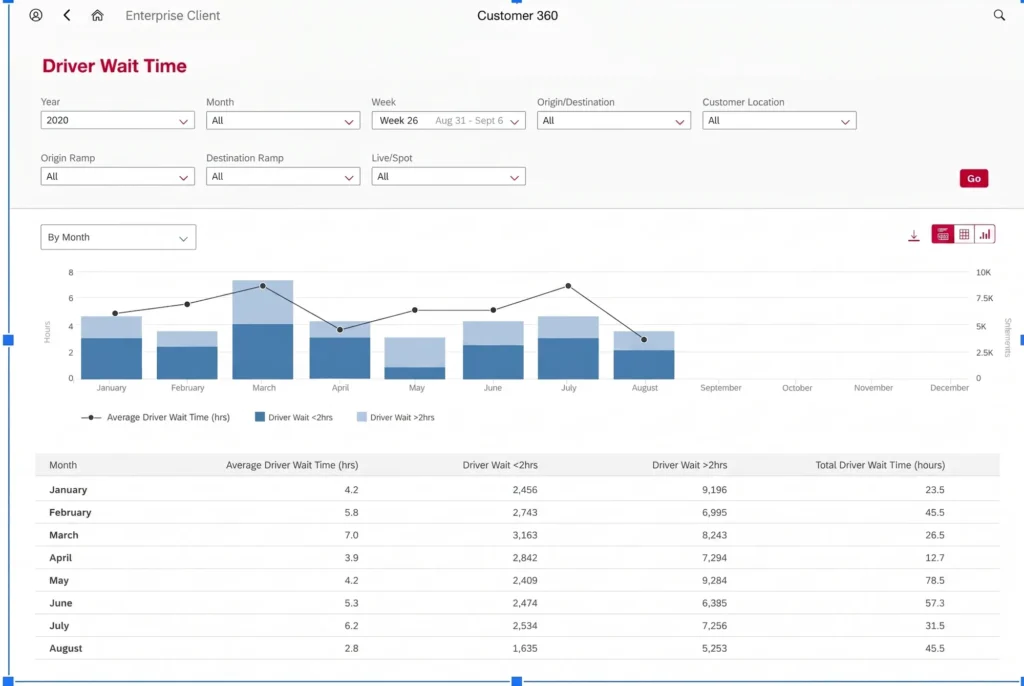
The Customer 360 work integrated SAP ERP, CRM/CRP, and APO into a consolidated view built on S/4HANA, SAP Gateway, SAP UI5, and HANA XSA. The platform surfaced average and total driver wait time, equipment dwell, and shipment performance analytics by terminal, port, and time period, across day, week, month, and quarter cuts.
For Facility Tools, the team replaced the legacy customer-facing applications with a central dashboard and three specialized Fiori apps: Equipment Summary, Order In Equipment, and Release Equipment. The build ran on SAP HANA Enterprise with NetWeaver Gateway, SAP CRM, and SAP TM, and connected non-SAP systems via Webseal, IBM MQ, and the railroad's internal TYES rail management tool.
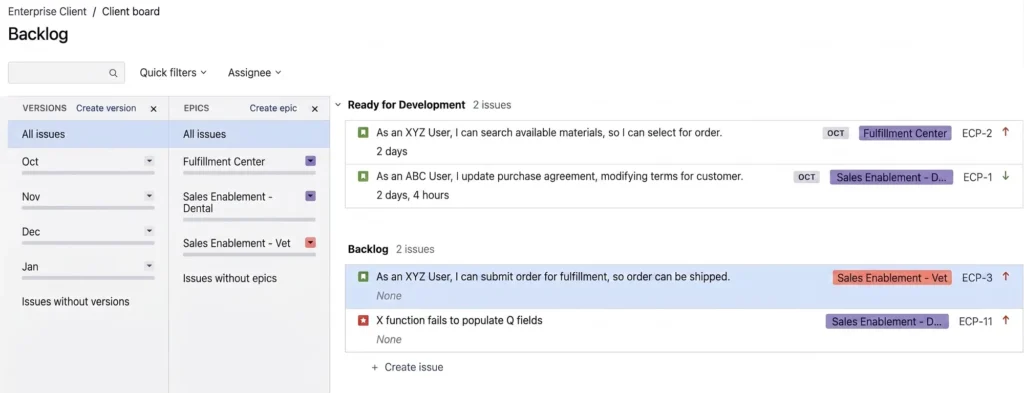
Delivery used an agile, portfolio-backlog approach with a full release plan. The team piloted both tools with a small user group before rolling them out more broadly, which gave the organization a low-risk way to build confidence in the new platform.
The outcomes
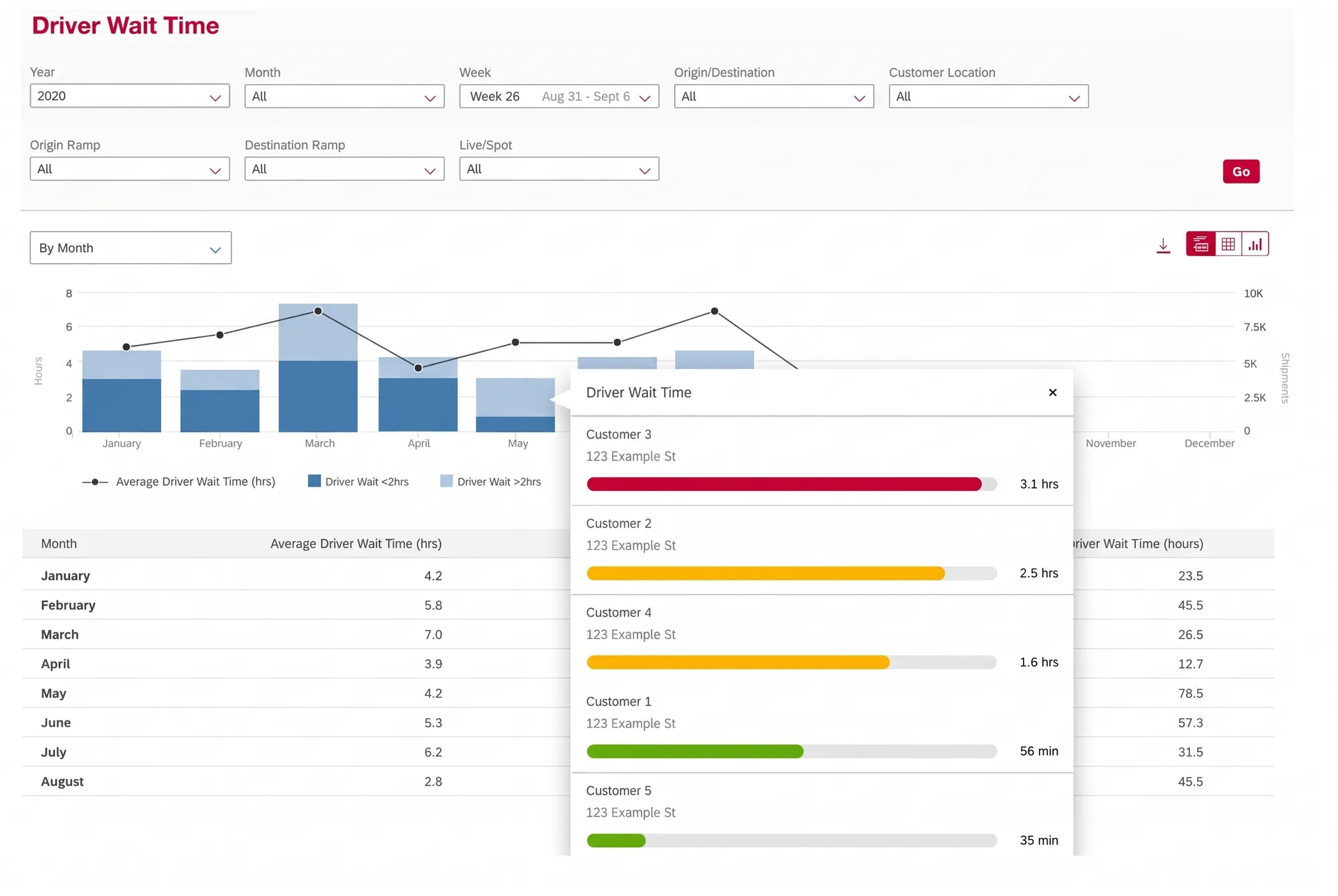
Driver wait time dropped by roughly 50% from a baseline of over 90 minutes. The Customer 360 platform identified the top five customer locations with the highest driver wait and equipment dwell, giving operations a clear list of where to focus.
The solution brought new visibility into export performance (on-time to port cutoff percentage) and import performance, including port dwell hours, vendor transit and processing time, and customer dwell hours. Data that previously required manual assembly was now available by terminal, port, month, week, and quarter in a single view.
Facility Tools delivered measurable gains in user adoption and data-processing accuracy. Legacy systems were retired, reducing system landscape complexity and the maintenance overhead that came with them. Users reported higher satisfaction with the replacement tools.
If we built this today
Concept · not delivered scopeThe single customer view, grounded for agents.
This is a forward-looking concept, not the scope we delivered on this engagement. It is the build we would reach for now, grounded in SAP that ships today.
When customer logistics data sat split across ERP, CRM, and APO with no real visibility into driver wait or equipment dwell, the answer was one consolidated view, and today that view can ground a Joule agent that watches the queue and drafts the fix.
The data product
Customer Intelligence
Pulls shipment, driver, cargo, and freight signals from across the SAP estate into one governed customer view, grounded by SAP Knowledge Graph so the agent and the apps share the same meaning of dwell, wait, and on-time. This is the single source the railroad had to build by hand last time.
Intelligent Application on SAP Business Data Cloud
The Joule agent
Logistics Exception Triage
Reads driver wait, equipment dwell, and shipment status across what used to live in separate ERP, CRM, and planning systems, then flags the terminals and customer locations where wait is spiking and drafts the intervention before the queue backs up. Grounded in one customer view so it reasons over the same numbers the facility team sees.
SAP S/4HANA, SAP TM, SAP APO, SAP Fiori · PROPOSE · Average driver wait time and equipment dwell per terminal
The Fiori app
Track Sales Orders / Sales Order Fulfillment (delivery-block pattern)
The OOTB S/4HANA fulfillment cockpit with Joule embedded, where a coordinator can see shipment and order status in one place and ask Joule why a load is held or which facility is running hot. Stands in for the hand-built Customer 360 and Facility Tools dashboards.
Embedded in the Fiori launchpad.
We would still mine the real shipment and facility flows in SAP Signavio first, map the three-system landscape in SAP LeanIX, and let MIND accelerators carry the old custom apps forward instead of rebuilding them cold.
What we built
-
~50% reduction in driver wait time from a 90-minute baseline
Customer 360 on S/4HANA and HANA XSA
Integrated SAP ERP, CRM/CRP, and APO into a unified customer view with analytics on driver wait time, equipment dwell, and export and import performance by terminal, port, and time period.
-
Top 5 high-wait locations identified and tracked
Driver wait time analytics
Real-time visibility into average and total driver wait time by day, week, month, and quarter, with identification of top customer locations by wait and dwell.
-
Real-time logistics performance across all key time dimensions
Export and import performance dashboards
Surfaced on-time to port cutoff percentage for exports and port dwell hours, vendor transit time, and customer dwell for imports, data that was previously inaccessible without manual work.
-
Legacy systems retired. User adoption and data accuracy improved
Facility Tools: central dashboard and Fiori apps
Replaced legacy customer-facing applications with a central dashboard plus three specialized Fiori apps: Equipment Summary, Order In Equipment, and Release Equipment.
-
SAP and non-SAP systems connected across all facility workflows
Non-SAP system integration
Connected the new platform to external systems via Webseal, IBM MQ, and the railroad's internal TYES rail management tool, ensuring the new Fiori apps had the data they needed.
-
Low-disruption rollout for an org new to Agile delivery
Design thinking and Agile delivery model
Ran persona-based design thinking workshops before building, then piloted tools with a small user group ahead of broader rollout, using a portfolio backlog and release plan.
A look at the work