UX Design · SAP Customer Service · Fiori
Design thinking for customer service: two prototypes, two standout usability scores
Leading Producer of Consumer Foods Delivered 2021-2022
Two design-thinking sprints gave the company's customer service team prototypes they called life-changing, scoring 80.5% and 95% on the System Usability Scale.

By the numbers
-
80.5% SUS
Usability score on the Phase 1 customer service portal
-
95% SUS
Usability score on the Phase 2 contact data tool
-
2 phases
Design-thinking cycles, each validated with real end users
Before
Two friction points in the same team
- Order-change emails from the Customer 360 system lacked clarity, sending customers back with follow-up questions every time.
- The central inventory tool surfaced no contact information, so resources tracked down phone numbers and emails manually every day.
- No single system the team could trust for contact data.
After
Two validated prototypes, two strong scores
- A redesigned notification portal that gave customers the context they needed up front, validated at 80.5% SUS.
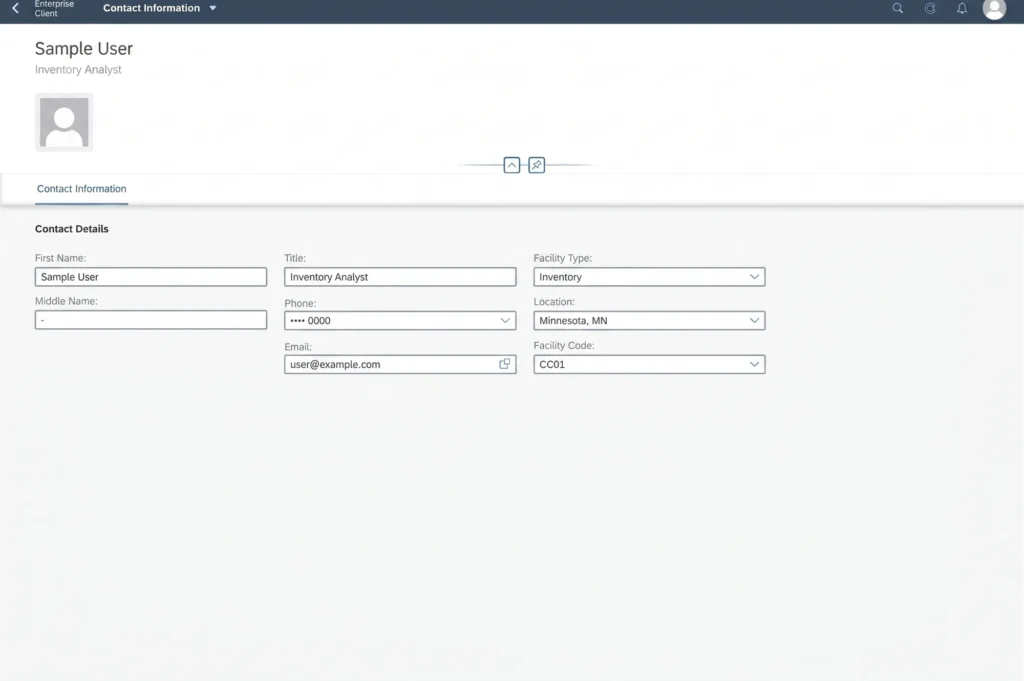
- A single source of truth for contact data, universally accessible, validated at 95% SUS.
- Customer operations specialists who called the new tools clear, easy to navigate, and life-changing.
Built on
- Design Thinking
- Rapid prototyping
- System Usability Scale (SUS)
- SAP Fiori
Why this matters
Design thinking is often talked about more than measured. This engagement produced two SUS scores, 80.5% and 95%, from the actual end users doing the actual work, with quotes to match. That is the kind of validation that holds up.
The challenge
The company's Customer 360 system was generating outbound order-change emails that consistently confused customers. Tier 1 and tier 2 accounts kept coming back with questions, and the back-and-forth ate into the customer service team's time.
A second problem was running in parallel. The central inventory management tool did not surface the contact information the team needed. Every day, resources were manually tracking down phone numbers and email addresses that should have been one click away. There was no single source of truth, and no one could agree on which system to trust.
What we did
Mindset ran two sequential design-thinking engagements focused on the people doing the work, the customer operations specialists who sent the emails and fielded the follow-up calls every day.
In Phase 1, the team examined how order-change notifications were structured and timed, redesigning the customer service portal so the emails went out with enough context the first time. The work included rapid prototyping and live usability sessions with the client's own customer operations specialists.
Phase 2 took on the contact data problem. Mindset designed a single source of truth for contact information: universally accessible, kept current, and built to complement the existing CRM rather than fight with it. The prototype went through the same structured usability review, with end users walking through real workflows and giving direct feedback.
The outcomes
Phase 1 produced a redesigned portal that scored 80.5% on the System Usability Scale. The customer operations specialists who tested it were direct: they said the interface was clear, easy to navigate, and genuinely changed how they thought about the job.
Phase 2 scored 95% SUS. Users called the prototype intuitive and said it addressed every pain point they had raised. One tester asked how the team had built something so useful so fast.
Both scores validated that the redesigned tools would hold up in production, not just in a demo. The engagement also established design thinking and Fiori advisory as a foundation for broader SAP work the company has continued to build on.
If we built this today
Concept · not delivered scopeOne trusted view of contact data.
This is a forward-looking concept, not the scope we delivered on this engagement. It is the build we would reach for now, grounded in SAP that ships today.
The original engagement gave users a single, intuitive source of truth for contact data they used to hunt for across a system that did not hold it, and keeping that view accurate is now an agent's job.
The Joule agent
Contact Data Steward
Watches business-partner and contact records for stale, missing, or conflicting details, then drafts the correction with the source it found so a data owner can approve before it updates. It also surfaces the right current contact to a user in the moment they need it.
SAP S/4HANA, SAP Master Data Governance, SAP BTP, SAP Integration Suite · PROPOSE · Time users spend tracking down a current, accurate contact
The Fiori app
The contact and business-partner master data Fiori app, with Joule embedded
The master data app where contact records live, with Joule in the launchpad so a user can ask for the right contact or flag a wrong one without leaving the screen they already work in. We would name the exact app once we map the landscape, rather than guess it here.
Embedded in the Fiori launchpad
The data product
Customer Intelligence
The intelligent app that grounds the agent in real account and contact context, who the people are, how to reach them, and what is current, so corrections are based on the live picture and not a stale copy. It is the single, trusted view of contact data this engagement was reaching for.
Intelligent Application on SAP Business Data Cloud
We would mine the find-a-contact flow in SAP Signavio first, map the Customer 360 and Integration Suite landscape in SAP LeanIX, and let MIND accelerators carry the proven prototype logic into the new build.
What we built
-
Redesigned order-change notification portal
A reworked customer service portal that restructured outbound order-change emails for clarity, so tier 1 and tier 2 accounts received enough context the first time and follow-up calls dropped.
80.5% System Usability Scale score
-
Contact data single source of truth
A prototype central repository for contact information, universally accessible to customer service resources and designed to complement the existing CRM without replacing it.
95% System Usability Scale score
-
Design thinking facilitation
Structured design-thinking sprints with the company's customer operations specialists, including problem framing, rapid prototyping, and structured usability validation sessions.
Two full design-thinking cycles completed
-
Usability validation sessions
Live walkthroughs with customer operations specialists using the System Usability Scale as a structured measurement, producing scored results the team could act on.
SUS scores of 80.5% and 95% across two phases
-
Fiori and SAP UX advisory
Advisory on SAP Fiori design patterns and broader SAP UX principles, giving the team a framework for future portal and tooling decisions.
Foundation for continued SAP platform investment
A look at the work